
 by
by Supreme Court warns UP Police for misusing criminal law in civil disputes
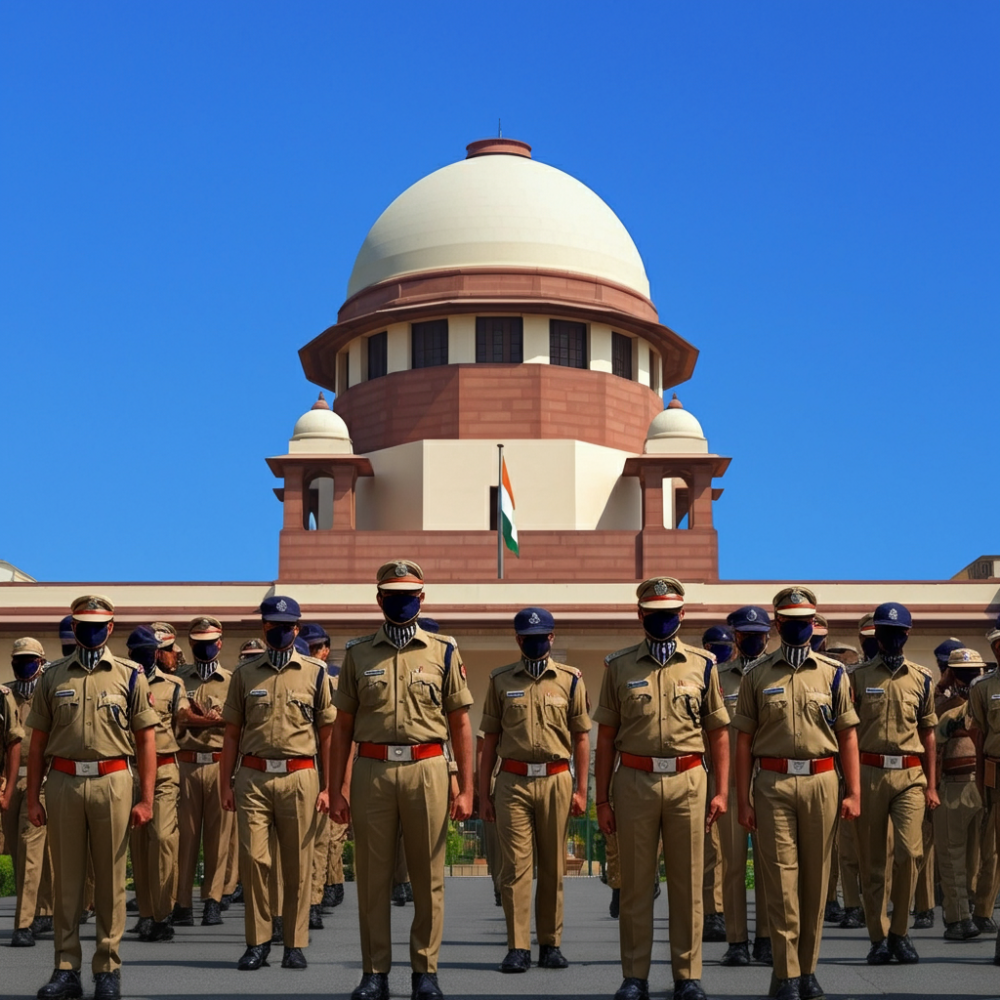
Supreme Court on Misuse of Criminal Law by UP Police – The recent Indian Supreme Court warns to the Uttar Pradesh (UP) police has attracted a lot of attention, with the judiciary strongly criticising the misuse of the legal process. The case was based on a dispute relating to monetary transactions, which shows that the authorities have long failed to understand the difference between civil and criminal matters.
Facts of the Noida case
The Supreme Court’s review was related to a case from Noida, which was related to a legal dispute. An FIR was registered, levelling allegations of criminal breach of trust, cheating and criminal intimidation under sections 406, 420 and 506 of the IPC.
Issues raised by the Supreme Court
- The contents of the FIR were directly copied into the chargesheet without any proper investigation.
- Summons were issued on the basis of unclear and insufficient evidence.
- The procedure followed was not in connection with established judicial guidelines.
The bench said such practices not only undermine the legal process but also make the system ineffective.
Responsibility of UP police and officials
The Supreme Court asked the Director General of Police (DGP), Station House Officer (SHO) and Investigating Officer (IO) to file affidavits in which they have to explain their course of action. This affidavit will establish that the police adopted a wrong investigation method.
Why did the Supreme Court warns the Uttar Pradesh Police?
The Supreme Court strongly criticised the UP Police for turning a civil dispute into a criminal case. In particular, the registration of the First Information Report (FIR), the chargesheet and the issuance of summons in this case were done through the wrong process, which was in violation of due process. The court termed this practice as an “abuse of criminal law” and said that it “violates the basic structure of the law”.
Growing trend of criminalizing civil disputes
The judiciary has taken a keen note of the way criminal law is being used in civil cases for some time now. For example, disputes related to contracts, monetary payments or personal understandings are wrongly turned into criminal cases using certain sections of the IPC. This not only puts a lot of pressure on the legal system, but people involved in such disputes also face the problem of unemployment.
What is the difference between civil and criminal cases?
- Civil cases are disputes that occur between individuals or organizations, such as breach of contract or payment of money.
- Criminal cases are those that relate to crimes against the state or people, such as theft, assault or fraud.
Filing criminal charges for civil disputes undermines the integrity of justice and the legal system.
Misuse of criminal law in civil disputes
The Supreme Court has repeatedly emphasised that criminal law should not be misused to resolve civil cases. Such misuse leads to systemic inefficiencies as it diverts resources meant for genuine criminal cases. Moreover, it causes unnecessary suffering to innocent individuals.
The bench said that this trend is reducing people’s faith in the legal system. Misuse of FIRs, vague charge sheets and irregular police action pose a risk of legal inequality.
Supreme Court’s concern about rule of law
The court’s words “complete destruction of the rule of law” reflect the gravity of the issue. The Supreme Court warned that if this trend of converting civil disputes into criminal cases continues, it may further reduce citizens’ faith in the legal system.
The court also said that the police do not have the right to intervene in such disputes, as their use in such cases often leads to random investigation or presentation.
Sharif Ahmed vs State of UP (2024)
The case is linked to the Supreme Court’s previous judgment Sharif Ahmed vs State of UP (2024), which laid down guidelines to understand the difference between civil and criminal cases. Despite this, the case shows that the state police did not properly implement these guidelines.
Guidelines to prevent misuse
To prevent such incidents, the Court reiterated some important points:
- FIRs should be registered only in cases where there is clear evidence in criminal cases.
- Police investigations should be conducted following established due process.
- Charge sheets should be filed only in FIRs
Also Read : Justice for Mumbai: Tahawwur Rana’s Extradition Fight
Join Us : Facebook


One thought on “Supreme Court on Misuse of Criminal Law by UP Police”