
 by
by Trump protests: A global analysis
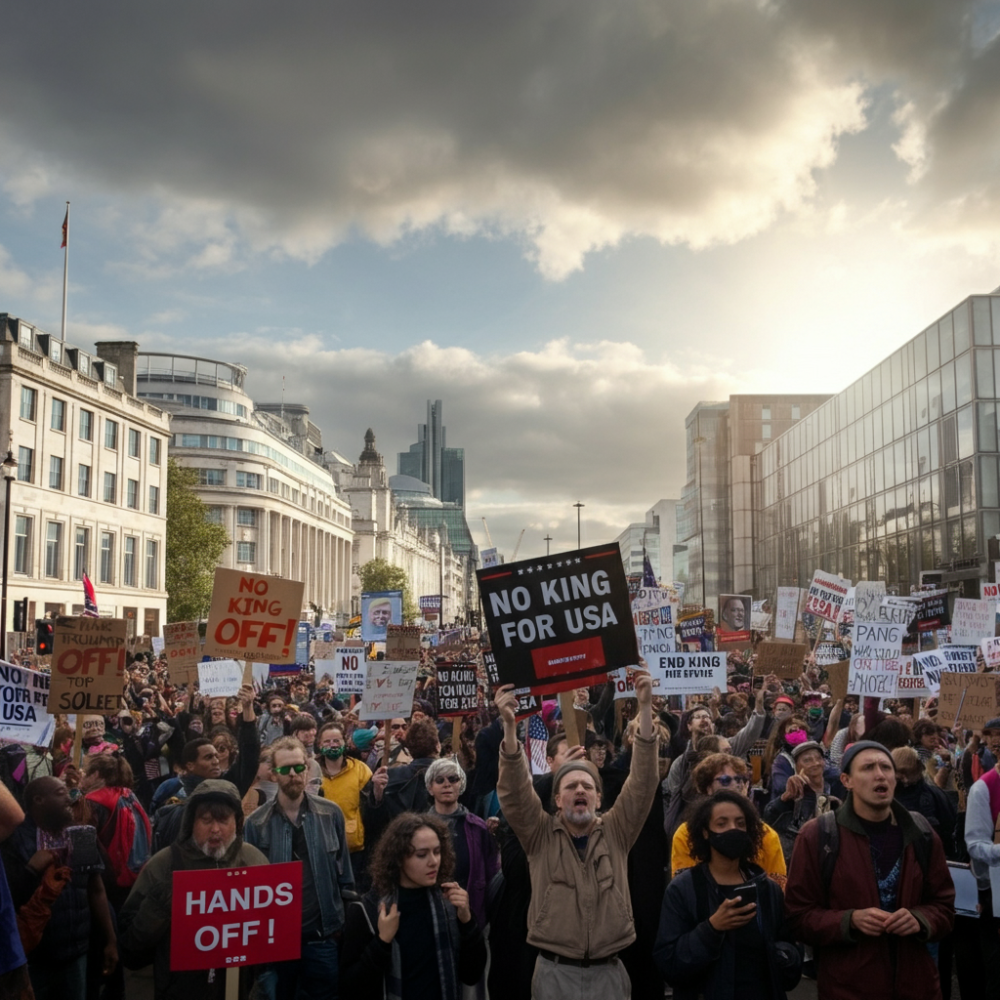
Whenever we talk about public protests, it is always a powerful way to express one’s anger. After Donald Trump entered the political arena, he ignited lines of both support and opposition. The Global Protests Against Trump that have attracted the most attention are those against Trump, not just in the US but around the world. From street protests in Washington D.C. to rallies in cities like London and Berlin, the details and intensity of these demonstrations raise important questions about their causes, significance, and impact.
In this blog, we will analyze the global Trump protests, understanding the emotions behind them, their international image, and what impact these protests may have on American and world politics.
Why are protesters angry?
The protests against Trump are linked to political decisions and policies. The protests have spread to several important areas:
Human rights and civil liberties.
Trump’s repeal of abortion rights, his strict immigration policy, and his views on racial inequality have made him a target for many communities. The “Handmaid’s Tale” performance often seen during reproductive rights protests shows how concerned people are about their government’s decisions, especially when it comes to women’s rights.
Economy and trade debt
Trump’s trade war with China and the European Union, and the taxes he has imposed on steel and aluminum, are not only affecting international relations but also dominating global markets. Many leaders say these policies, which they feel will harm both the national and global economy, have sparked widespread protests.
Climate change and environmental policies
Backtracking on environmental protections, withdrawing from the Paris Climate Accord, and promoting fossil fuels are moves that have generated significant opposition to Trump’s environmental actions.
Dictatorship events
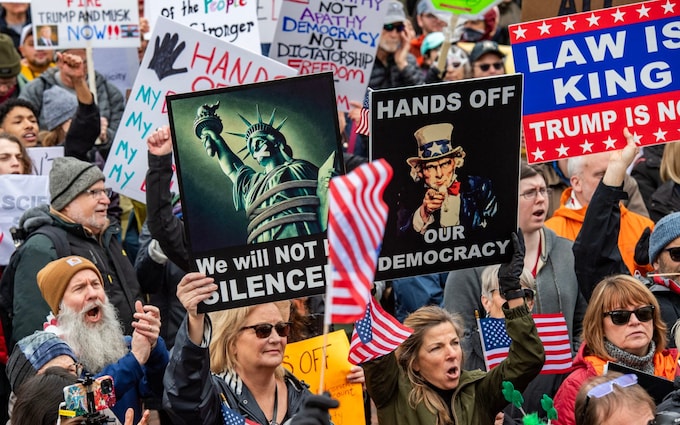
Trump’s opponents say his way of running the government is close to dictatorship. His objection to checks and balances, his cliched language and his indifference to democratic values have all led to opposition to him.
Given all these reasons for anger, a large and violent group of protesters has formed who are not happy with Trump’s policies and his leadership.
Global protests and their significance
International participation
These protests are also special because their impact is not limited to the US, but their effect has been seen in many countries of the world. Thousands of people took to the streets in cities like London, Berlin, Paris and Toronto and raised their voice of protest along with their American brothers. For example, during Trump’s initial swearing-in in 2017, there were protests in more than 600 cities, including a global protest called the “Women’s March”.
This international support has a deeper message – it shows that people around the world who are not technically affected by US domestic policies still raise their voices because the US has a dominant position in the world.
Impact on global leadership
These protests also show something else: Trump’s policies and actions have changed the image of American leadership in the world. Countries like Germany and the U.K., once considered close friends of the U.S., now express anger at Trump’s “America First” policy and his dealings with NATO. These protests also show how such policies affect global behavior.
Controversy, the voice of a community
These protests also show how different means are behind these protests. Some people are protesting for reproductive rights, while others are protesting for issues like the economy, health or climate change. But most importantly, all protesters feel that Trump’s government is a step backwards, harming progress and human rights.
Are these protests important?
The success of protests and their impact have always been a topic of discussion, but here are some of the results that come through these protests:
Impact on public opinion
These protests can lead to major dialogue and awareness. When media coverage is high and people attend large demonstrations, certain issues are raised that usually remain unresolved.
Effects on elections
These protests affect voter turnout. For example, the Women’s March after Trump’s inauguration led to a “blue wave” in the 2018 midterm elections, in which Democrats won the House of Representatives.
Challenging policy
Trump has often said that these protests are just noise, but it is also true that large demonstrations sometimes force political leaders to reconsider their policies. For example, protests against abortion laws have led to legal changes in several states.
International pressure
Global protests also exert pressure outside the US. Trump’s tariffs have received significant opposition from European allies and other foreign governments that were influenced by protests around the world.
Are we seeing a political shift?
These large protests show that these are not just protests against policy, but may mark a larger political shift. They are a display of grassroots activism that is emerging as a powerful response to institutional politics. Movements such as the Women’s March, Black Lives Matter, and climate action groups have played a key role in holding political leaders accountable.
However, Trump’s response to these protests, including his statement that “my policies will never change,” shows that his government has a tough stance towards protesters.
Role of social media
These protests would not have been possible without social media. Platforms such as Twitter, Facebook, and Instagram have helped connect protesters and spread their message across the world. Hashtags such as #ResistTrump and #HandsOff played a key role in organizing these protests.
Way forward
The global protests against Trump are not just protests, but also represent a growing trend of support and social and political activism around the world. This is a memorable moment for us
Also Read : Karnataka High Court Advocates for Uniform Civil Code
Join Us : Facebook


One thought on “Global Protests Against Trump: A Closer Look”